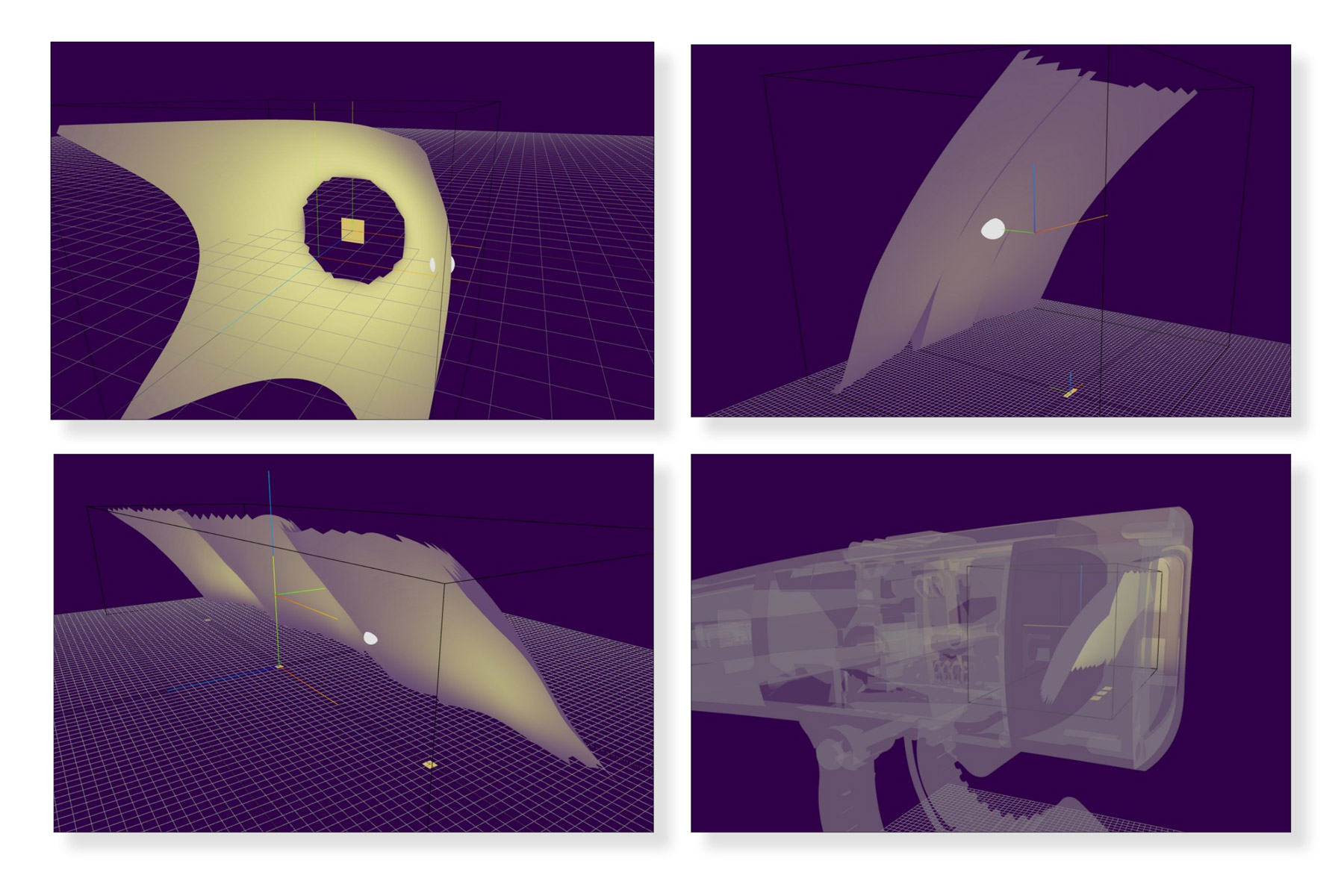

Luminous Algorithms is a web-based optical engineering platform that computes manufacturable free-form optical surfaces directly from product-specific lighting specifications — in hours, not weeks. It replaces iterative manual design loops with a reliable, specification-driven workflow that seamlessly integrates into existing CAD environments.

Luminous Algorithms Simulation

Benefits & Features

Luminous Algorithms is a disruptive optical engineering platform that automates the creation of production-ready optical surfaces from product specifications. By eliminating manual design loops and integrating seamlessly into engineering workflows, it delivers speed, reliability and manufacturability at scale.

Luminous Algorithms delivers measurable impact across engineering functions:

  • Accelerated development cycles through automation and specification-driven workflows
  • Reduced reliance on manual expertise, lowering risk and dependency on specialized designers
  • Predictable delivery times with performance outputs generated in hours rather than days or weeks
  • Enhanced collaboration between optical, mechanical and project teams
  • Lower design and simulation costs by minimizing reliance on resource-intensive ray tracing
  • This positions Luminous Algorithms not only as a faster optical design tool but as a strategic enabler for product development teams.

Category:
Developed by

Luminous Algorithms

Your contact

I will be happy to provide you with information about our software products.

Mario Prang
Mario PrangProduct sales

The Challenge

Optical engineering has historically been a slow, expert-dependent and simulation-intensive process. Traditional workflows rely on repeated manual optimization and extensive ray-tracing, which can slow development cycles and make early manufacturability validation difficult.

Engineering teams often struggle with:

  • lengthy design iterations that delay project timelines
  • significant reliance on specialized optical experts
  • late discovery of manufacturability issues
  • inefficiencies at the interface between optical design and mechanical engineering

In an era where time to market and cross-disciplinary collaboration are essential, these constraints impose substantial development cost and risk.

The Solution

Luminous Algorithms transforms optical engineering by computing free-form reflectors and optical surfaces fully automatically from product specifications such as target light distribution, intensity and mechanical constraints.

This approach eliminates manual tweaking and delivers physically valid, production-ready geometries without iterative ray-tracing loops.

Engineers define optical goals using intuitive, visual tools and the platform uses patented algorithms to translate those goals into high-precision optical surfaces. The result is a workflow that is faster, more predictable and less resource-intensive than traditional approaches.
Key Capabilities & Workflows

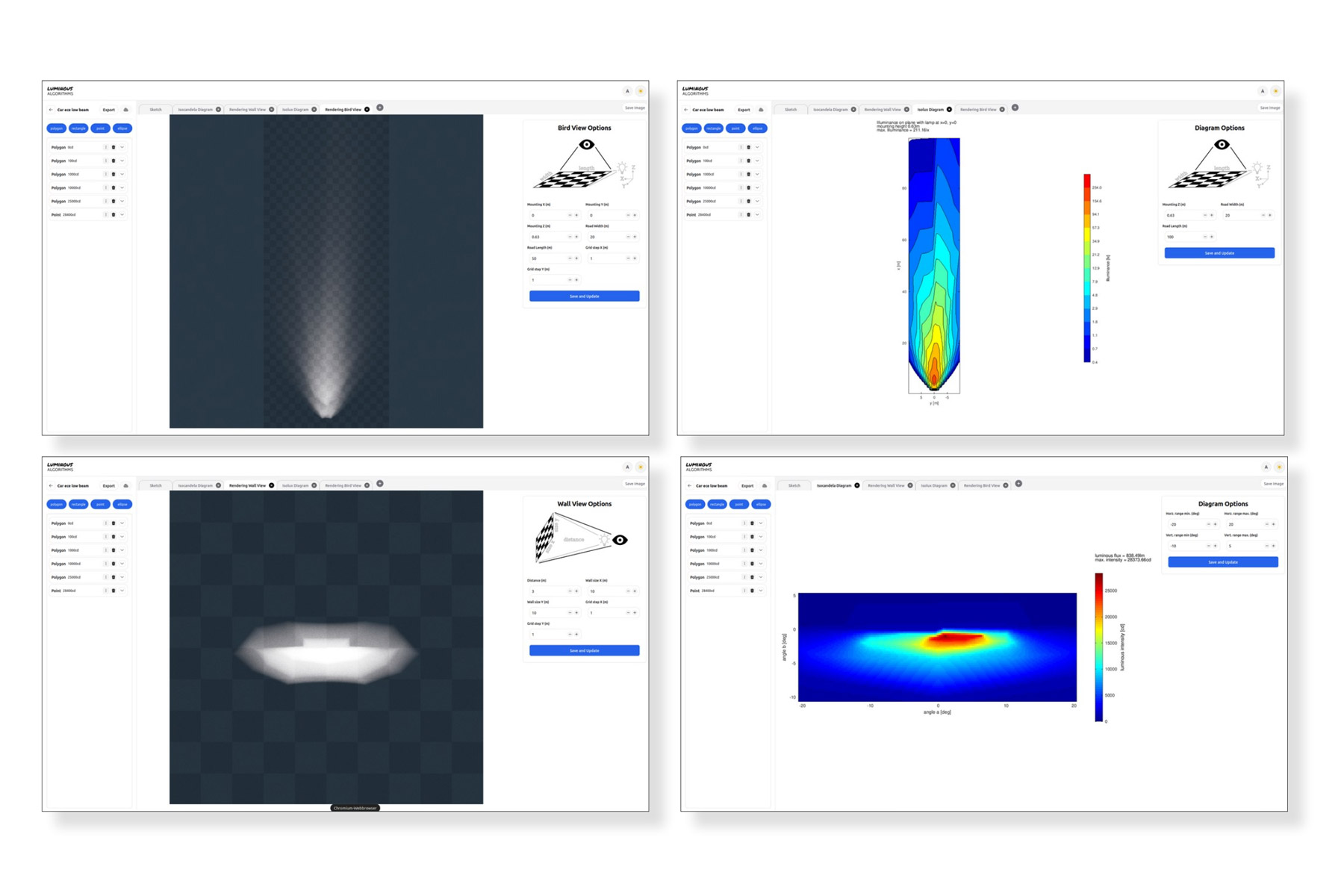
Parametric light modeler

  • Intuitive, reactive user interface
  • Purely web based, no software install
  • Works on PC and tablet

Specification-Driven Optical Design

Users begin by defining optical goals visually — including beam shape, intensity and distribution — using an intuitive, web-based interface. This specification becomes the core input for automated computation, ensuring that the design starts from product-relevant parameters rather than generic optimization targets.

The platform supports the definition of mechanical constraints such as available space, LED placement and orientation, enabling optical surfaces to be shaped with full awareness of the mechanical context.

Automated Surface Generation

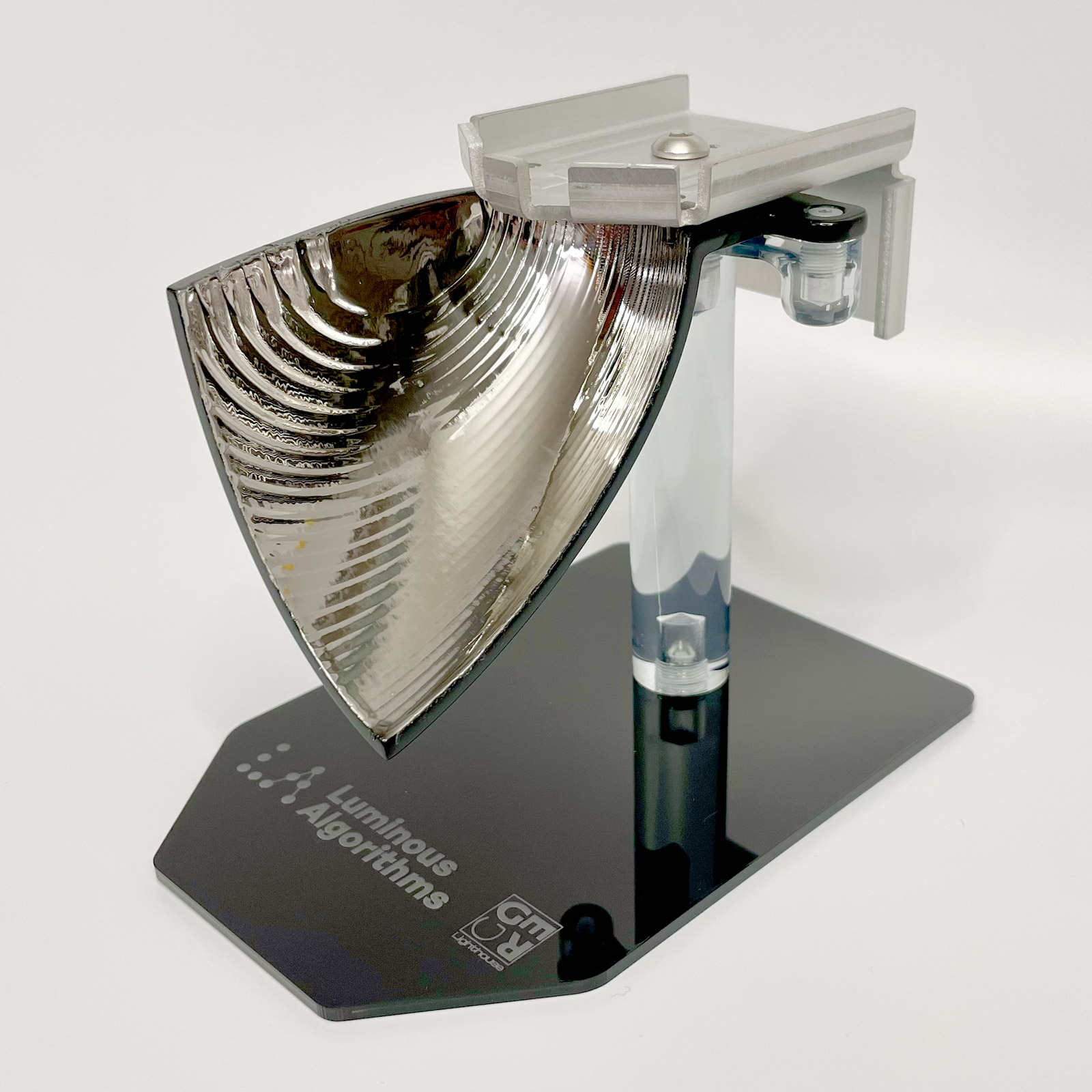
At the heart of the product are patented algorithms that compute free-form optical surfaces directly from specifications. This breaks with traditional design paradigms by transforming requirements into high-fidelity geometries without lengthy ray tracing or manual optimization loops.

The outcome is smooth, manufacturable surfaces generated with a single click.

Seamless Integration & Export

Luminous Algorithms delivers output that can be immediately incorporated into engineering workflows:

  • Export of production-ready surfaces directly into CAD environments
  • Support for common geometry formats (e.g., STL, IGES, STEP)
  • Export of lighting data in formats such as IES and Eulumdat for simulation and rendering
  • This ensures that the results can be validated, simulated and built without translation overhead.

Preview & Iteration

Previews and performance evaluations are generated within minutes, giving engineers early insight into surface geometry and optical behavior.

Full production-grade surfaces are computed in hours, enabling iterative refinement on a realistic schedule.

Design Flexibility & Use Cases

Luminous Algorithms supports a broad range of lighting design scenarios:

  • forward-reflecting optics tailored to specific beam profiles
  • reflectors adapted to complex mechanical constraints
  • multi-emitter configurations
  • faceted and transitional surface elements

By computing surfaces directly from requirements, the platform accommodates both standard and unconventional optical solutions while maintaining producibility.