
SAMG (Algebraic Multigrid Methods for Systems) is a library of subroutines for highly efficient solution of large linear systems of equations with sparse matrices. Such systems of equations form the numerical core of most simulation software packages.
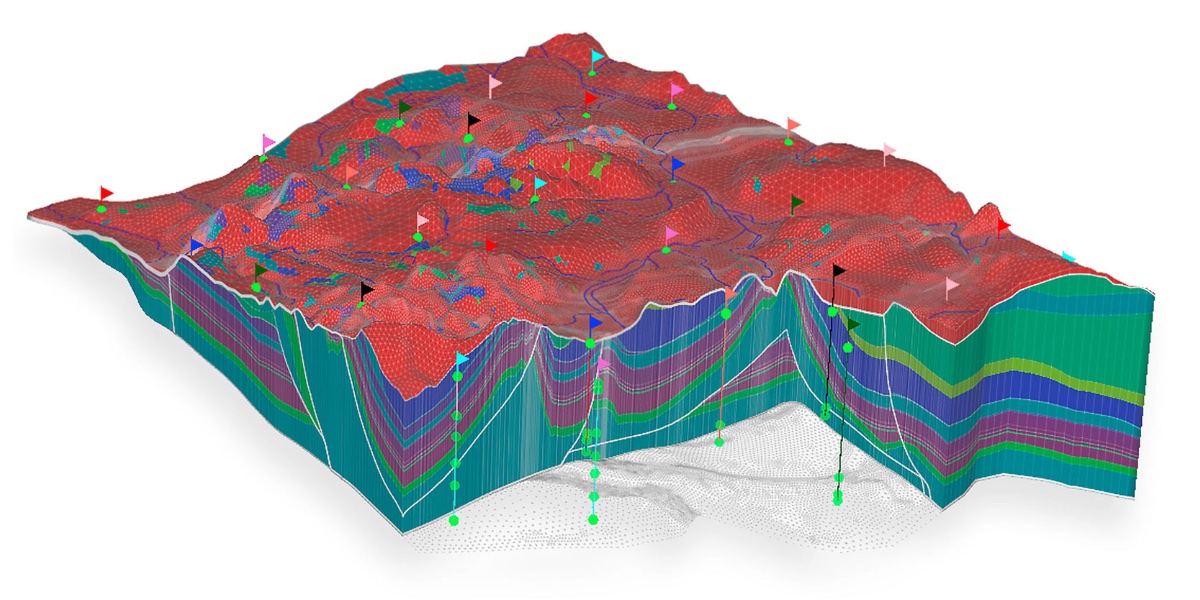
SAMG Groundwater simulation | © DHI Wasy
Benefit & value
Compared to classical methods (for example, conjugate gradient methods preconditioned by ILU), SAMG has the great advantage of being largely numerically scalable. This means that the computational effort with SAMG depends only linearly on the number of unknowns. Depending on the application and problem size, the resulting gain in computing time can be one to two orders of magnitude. SAMG can be integrated into an existing simulation package just as easily as a classic process.
Target groups
The SAMG library is of interest to anyone developing or using software tools to perform large-scale numerical simulations. In addition to our solver technology, we also offer analysis and consulting on application problems as well as the adaptation of our software to customer-operated computer systems, especially parallel computers.

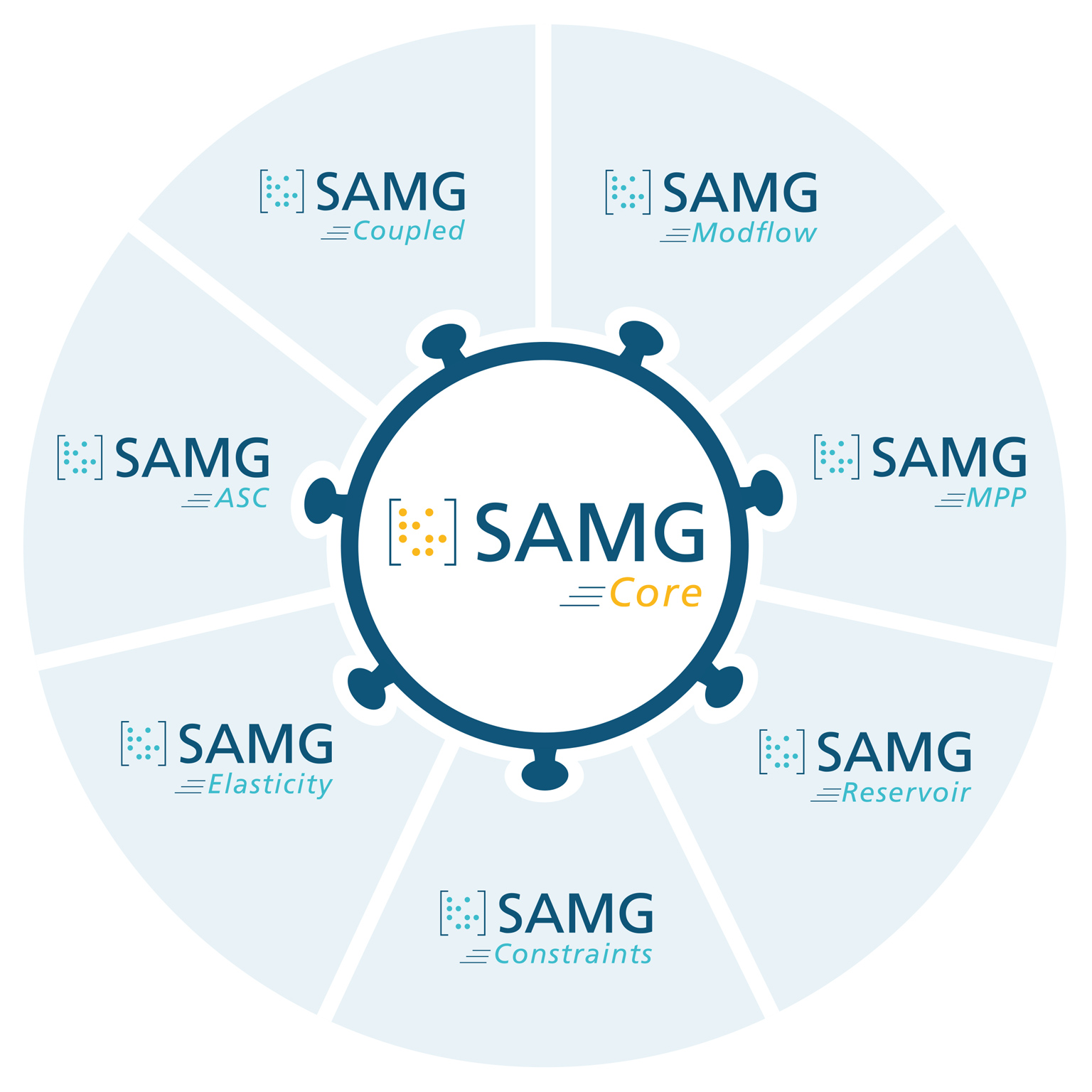
Outstanding properties of SAMG
In many applications of numerical simulation, for example fluid and structural mechanics, the structures and geometries are discretized by complex grids. In general, the finer such a grid is, the more accurate the simulation, but the larger the systems of equations resulting from the discretization process that have to be solved numerically. With the simulation accuracies required today, the time in which these systems of equations can be solved is a critical variable. Classical numerical solution methods are not able to solve the resulting large systems of equations in an economically justifiable computation time.
SAMG’s solution modules are based on modern hierarchical method approaches (algebraic multigrid methodology, AMG): Instead of working only with the given (extremely large) system of equations, algebraic multigrid methods combine the numerical information in a hierarchy of increasingly coarser systems of equations to solve the given problem faster. The underlying coarsening process is automatic and transparent to the SAMG user.